

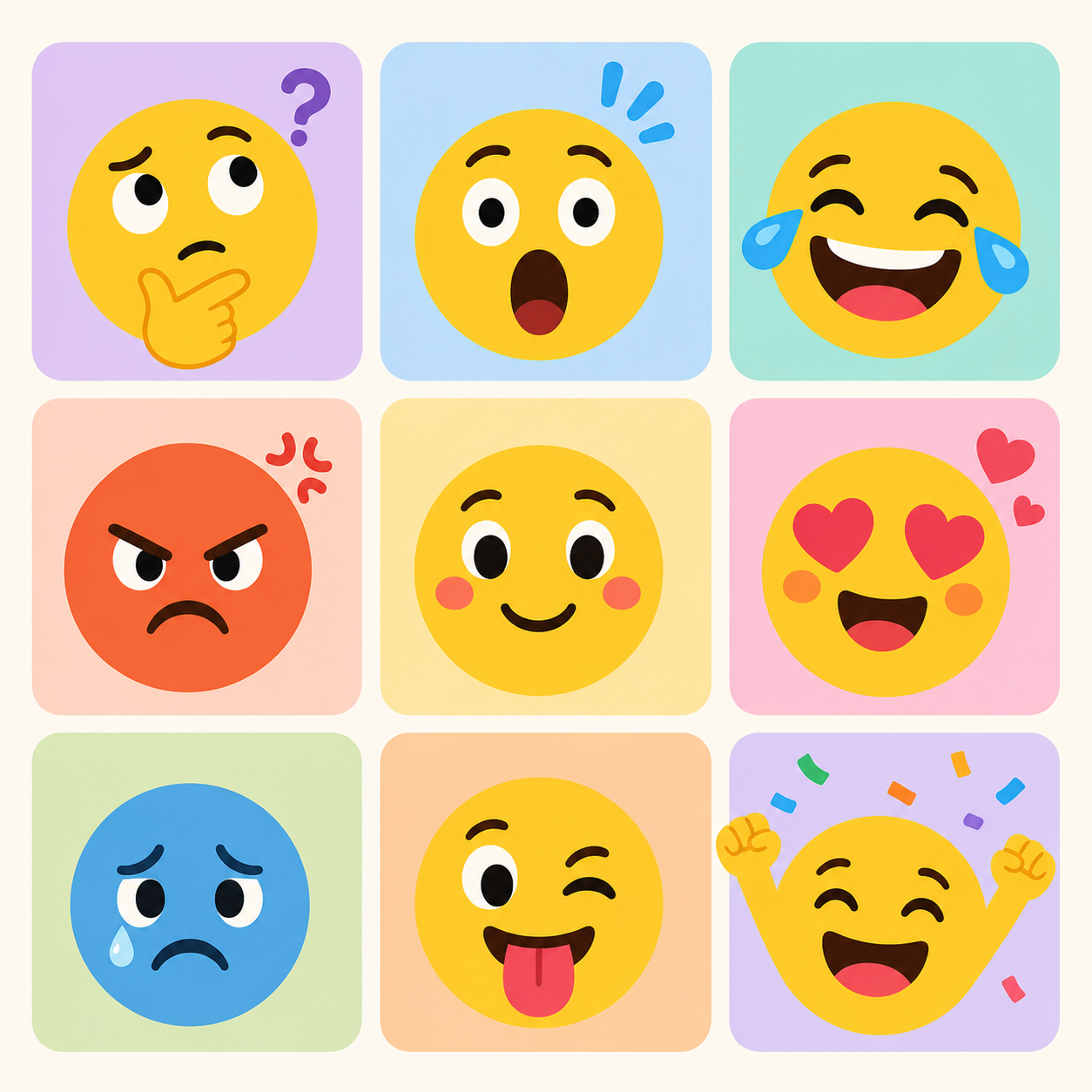
A reaction GIF works because it compresses a whole facial expression, a whole tone, into something you can send in half a second. The tricky part is picking the right one — a GIF that's slightly off in tone or intensity can land strangely, even if the general idea is right. This guide breaks reaction GIFs down by the mood they actually carry, so it's easier to grab the right one for the moment instead of just the first funny option you find.
Why the Right Reaction GIF Matters
Text alone struggles to carry tone. "lol" can mean genuine laughter, mild amusement, or barely-concealed irritation depending on context, and the reader has to guess. A well-chosen GIF removes that ambiguity — the expression on screen does the work a sentence would otherwise need several extra words to do.
That's also why a mismatched GIF can misfire. Sending an over-the-top shocked reaction to something mildly surprising reads as sarcastic even if you didn't mean it that way. Matching intensity, not just general sentiment, is what makes a reaction actually land.
Reading the Room Before Reacting
The same GIF that's perfect in a casual friend group chat can feel out of place in a more professional or semi-formal conversation. Before firing off a big reaction, it's worth a half-second check on whether the tone fits where you're sending it.
Reaction GIFs by Mood
Confusion
Confused-face GIFs are useful when a message genuinely doesn't make sense, or when someone says something so left-field that a real response would take more effort than it's worth. These work best when the confusion is genuine rather than performative — using one sarcastically usually reads as dismissive.
Shock and Disbelief
Shocked reaction GIFs cover everything from mild surprise to full disbelief. The trick is matching the size of the reaction to the size of the news — a huge, dramatic shock GIF in response to something only mildly surprising can come across as mocking.
Laughter
Genuinely funny moments call for laughing GIFs, and this category tends to be the most forgiving — it's hard to overreact to something that's actually funny. Crying-laughing style GIFs in particular are common because they read as an honest, uncontrolled reaction rather than a performed one.
Approval and Celebration
Clapping, thumbs-up, and celebratory dancing GIFs work well for good news, achievements, or when someone's asking for encouragement. These tend to read warmly in almost any context, which makes them a safe default when you're not sure how big a reaction to give.
Skepticism and Side-Eye
Side-eye and skeptical-look GIFs are useful shorthand for "I don't quite believe that" without having to spell it out, which can keep a conversation light even when you're pushing back on something.
Sympathy and Support
Softer reaction GIFs — a gentle nod, a supportive hug-style clip — work for moments that need acknowledgment without over-the-top energy, like when a friend shares something mildly frustrating rather than genuinely upsetting.
Excitement and Anticipation
GIFs that show restless energy — bouncing, hand-rubbing, eager waiting — work well for building anticipation before something happens, like counting down to an event or reacting to a teaser of upcoming news.
Awkwardness and Cringe
A slow blink, a hesitant shrug, or an uncomfortable pause captured on GIF can carry the specific discomfort of an awkward moment better than any single word, especially when the situation is too mild to warrant a stronger reaction.
Where Reaction GIFs Get Used Most
Group Chats
In group chats, reaction GIFs often do double duty as a reply and as a way of steering the tone of the conversation — a well-placed GIF can defuse tension or amplify a joke without adding another message that needs its own response.
Social Media Comments
On public posts, a reaction GIF as a comment tends to read as lower-effort and lower-stakes than a written reply, which makes it a common choice when you want to react without starting an extended conversation.
Forums and Communities
In more casual online communities, reaction GIFs are often used to acknowledge a post without fully derailing a thread with a text reply — useful when a short "noted" reaction is all a moment calls for.
Building a Reaction GIF Habit That Reads Well
Over time, most people develop a small mental library of go-to reactions for common situations. The people whose GIF reactions land consistently well tend to share a few habits: they pay attention to how a reaction was received last time, they avoid leaning on the exact same GIF for every version of a feeling, and they're willing to occasionally send no GIF at all when a plain text reply actually fits better. A reaction GIF should add something a sentence couldn't easily carry — when it doesn't, it's usually better left unsent.
Tips for Using Reaction GIFs Well
- Match intensity to the moment, not just the category. A "mildly amused" GIF and a "losing it laughing" GIF are both technically "laughing" reactions, but they carry very different weight.
- Don't default to the same handful of GIFs for everything. Reusing one GIF for every situation dilutes its impact — it stops reading as a specific reaction and starts reading as a reflex.
- Consider the relationship, not just the message. The same GIF can read differently depending on who you're sending it to and how well they know your sense of humor.
- When in doubt, go warmer rather than more sarcastic. A slightly-too-nice reaction rarely causes problems; a sarcastic one that's misread can.
A Note on Sourcing and Attribution
Many popular reaction GIFs are clipped from movies, TV shows, or other media, which means the underlying footage may be copyrighted even though the GIF itself circulates freely online for casual reaction use. That's typically fine for everyday messaging, but if you're building something more formal — a blog post, marketing content, or a commercial product — it's worth confirming you have the rights to use a specific clip rather than assuming casual reuse norms apply.
Conclusion
The best reaction GIF isn't necessarily the funniest one available — it's the one that matches the actual emotional weight of the moment. Building a mental (or literal) shortlist organized by mood, rather than just favoriting whatever's trending, makes it much easier to react well instead of just reacting fast. SoundGIFs organizes reaction GIFs by mood and situation instead of just by what's popular, which makes it easier to find one that actually fits instead of settling for whatever comes up first. browse reaction gifs by mood to find GIFs sorted the same way this guide breaks them down, and keep a few favorites on hand for the reactions you reach for most.