

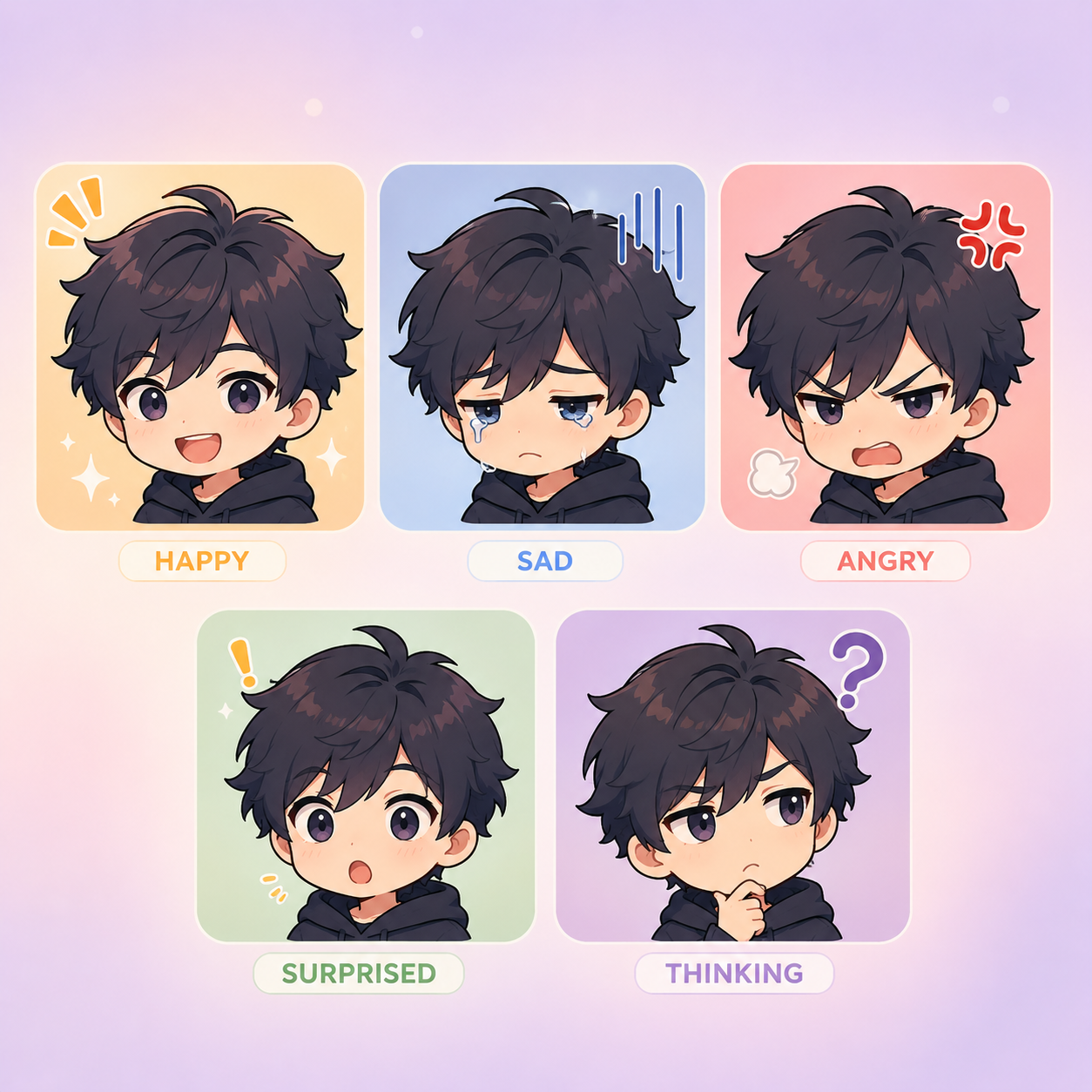
Texting the right reaction at the right moment is its own small art form, and anime reaction GIFs by mood are one of the easiest ways to get it right without typing a single word. Instead of scrolling endlessly through a search bar hoping the right expression pops up, it helps to think in categories — because the GIF that nails a "wait, what just happened" moment is completely different from the one that nails "I am so done with you right now."
This guide breaks anime reaction GIFs down by the moods people actually reach for them in — confusion, sadness, laughter, shock, and secondhand embarrassment — so you can go straight to the category that matches your moment instead of guessing.
How to Think About Anime Reaction GIFs by Mood
Most people don't search for a GIF by its exact content ("anime girl tilting head") — they search by the feeling they're trying to express ("I have no idea what's happening"). Sorting by mood matches how people actually browse, and it also helps avoid a common mistake: sending a GIF that's technically funny but emotionally off. A GIF that's a little too intense for a mild joke, or a little too soft for a genuinely big reveal, can land wrong even if the image itself is great.
Below are the five moods that come up constantly in everyday chat use, along with what makes each one distinct.
Confused and Puzzled Reactions
Confused anime reaction GIFs are the ones you reach for when a conversation has completely lost the plot — someone sends a message to the wrong chat, references an inside joke you weren't part of, or types something so unclear that "???" doesn't quite cover it.
Best for Group Chat Mixups
This category shines hardest in group chats, where crossed wires and out-of-context messages happen constantly. A tilted-head or squinting confused GIF communicates "I need context" faster than typing it out, and it usually gets a laugh instead of derailing the conversation further.
browse confused anime reaction gifs
Emotional and Crying Reactions
Crying anime reaction GIFs cover a much wider emotional range than the name suggests — everything from a single dramatic tear to a full breakdown, used for both genuinely sad news and completely over-the-top reactions to something trivial.
Best for Supportive Replies
When a friend shares bad news, a gentle crying GIF can acknowledge the moment without forcing you to find the perfect comforting words on the spot. It signals empathy while keeping the tone warm rather than heavy.
find crying anime reaction gifs
Laughing and Comedic Reactions
Laughing anime reaction GIFs are the most frequently used category by far, because comedy is the most common reason people share GIFs in the first place. These range from a subtle smirk to a full doubled-over cackle, and picking the right intensity matters — a huge laughing GIF for a mild pun can feel like overkill, while a small smile GIF for a genuinely great joke can undersell it.
These GIFs work especially well as the final word in a joke exchange, since they close out the moment without needing a follow-up message.
see laughing anime reaction gifs
Shocked and Surprised Reactions
Shocked anime reaction GIFs are built for the moments that need a bigger response than words alone — a plot twist, an unexpected announcement, or a piece of gossip nobody saw coming. The best ones in this category have wide, frozen eyes or a dramatic jaw-drop, capturing that split-second of total disbelief before a reaction fully forms.
This is one of the few categories where going bigger is usually better; a shocked GIF that's too subtle can read as mild interest rather than genuine surprise.
browse shocked anime reaction gifs
Facepalm and Cringe Reactions
Facepalm anime reaction GIFs live in their own space between disappointment and secondhand embarrassment. They're the go-to response for an obvious mistake, an awkward overshare, or a joke that missed so badly the room goes quiet. Unlike laughing GIFs, these carry a slightly exasperated tone — more "I can't believe this happened" than pure amusement.
They're particularly useful because they can defuse an awkward moment without being unkind; a facepalm reads as shared exasperation rather than a direct insult.
Building Your Own Reaction GIF Toolkit
Once you start thinking in mood categories instead of one-off searches, it gets much faster to respond in the moment. A few practical habits worth building:
- Keep a small favorites folder or saved collection covering each of the five core moods above, so you're not searching from scratch every time.
- Pay attention to intensity within a category — most moods have a subtle version and an over-the-top version, and picking the right one changes how the reaction lands.
- Match the GIF's energy to the platform. A huge, chaotic reaction that works great in a close friend group chat might feel like too much in a more public or professional setting.
- Don't be afraid to mix categories for compound reactions — a message that's both funny and a little unbelievable might call for a shocked-laughing hybrid rather than forcing it into just one mood.
 A group of anime characters standing next to each other with the word delicious on the ... — view on SoundGIFs
Matching Mood to Platform and Audience
One detail that trips people up when browsing anime reaction gifs by mood is forgetting that the same GIF can read differently depending on where it's posted. A wildly exaggerated laughing reaction that feels perfectly normal in a close friend group chat might feel like a strange choice as a public comment on a stranger's post. A few habits help keep this in check:
- In close friend groups, almost any intensity works, since the shared context and history make even the most chaotic reactions land as intended.
- In larger or more public group chats, it's usually safer to lean toward the mid-range intensity within a mood category rather than the most extreme version, since not everyone reading will share the same inside context.
- On public social platforms, subtler reactions tend to travel better, since they're legible to a much wider audience who may not know the poster personally.
- In professional or semi-professional chats, it's often worth skipping the more dramatic categories (full ugly-cry, double-hand facepalm) entirely and sticking to milder confused or mildly amused reactions.
Why a Mood-Based Approach Beats Random Searching
Searching for "funny anime gif" or "anime reaction" on its own tends to return a huge, unsorted pile of images with wildly different tones — some sarcastic, some genuinely emotional, some purely comedic. Browsing by mood category instead narrows that pile down to something usable in seconds, because it starts from the feeling you're actually trying to express rather than a vague content description. Over time, most people naturally develop a mental shortlist of two or three go-to GIFs per mood, and that shortlist becomes far easier to build once you're browsing a properly categorized library instead of a general search results page.
Conclusion
Anime reaction GIFs by mood work best when you stop thinking of them as one giant pile of images and start treating them like a toolkit — confusion, tears, laughter, shock, and facepalm-worthy cringe each have their own place in a conversation, and each has its own range of intensity within it. Once you know which mood you're reaching for, finding the right GIF takes seconds instead of minutes of scrolling. SoundGIFs organizes anime reaction GIFs by exactly these categories, so you can jump straight to the mood that matches your moment.