

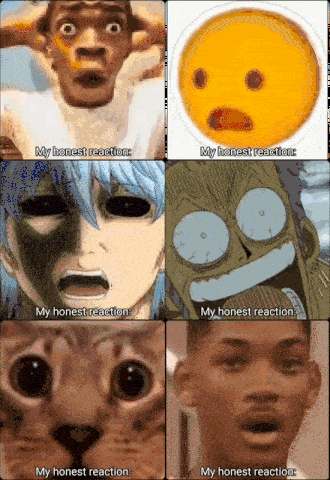
Some news is surprising. Some news makes your jaw actually drop. A jaw drop gif exists specifically for the second category — reactions big enough that a subtle raised eyebrow or a simple "wow" doesn't quite cover it.
It's one of the more exaggerated reactions in the general surprise category, which makes it powerful when used at the right moment and a little diluted when overused.
What separates jaw drop from other shocked reactions
A jaw drop gif goes further than a simple wide-eyed look or a raised eyebrow — the exaggerated open-mouth gesture signals genuine disbelief rather than mild surprise.  A black and white cat with a mustache is looking at the camera with a caption that says... — view on SoundGIFs That scale is exactly why it should be reserved for news that actually earns it.
Good news or bad news — it works for both
Because the gesture communicates disbelief rather than a specific emotion, jaw drop gifs work equally well for major good news and major bad news. The surrounding conversation makes clear which direction the shock is pointing, so the same reaction covers both.
When to reach for this reaction
This gif earns its place for genuinely significant news — an unexpected engagement announcement, a surprising life update, plot twists in a show everyone's watching, or news that actually changes plans or expectations. It's less suited to routine surprises, which tend to read better with a milder reaction.
Group chats vs one-on-one conversations
In a group chat, a jaw drop gif often triggers a cascade — one person sends it, and others follow with their own reaction to the same news, building a visible collective moment of disbelief. In a one-on-one chat, it works as a strong, unambiguous signal that the news genuinely landed.
Why overusing it backfires
Because jaw drop gifs are built for big moments, sending one for routine or minor news dilutes what it's supposed to communicate. If it becomes a default reaction to anything mildly interesting, it stops registering as "this is genuinely huge" the next time something actually is.
Pairing it with milder reactions
Saving wide eyes blinking gifs for smaller surprises and reserving a jaw drop reaction specifically for the bigger moments keeps both reactions meaningful, rather than flattening every level of surprise into the same gif.
Conclusion
A jaw drop gif works precisely because it's reserved for news that actually deserves it — the bigger the reaction, the more it should mean. Browse SoundGIFs' collection of reaction gifs for every mood to match the right level of shock to your next big update.